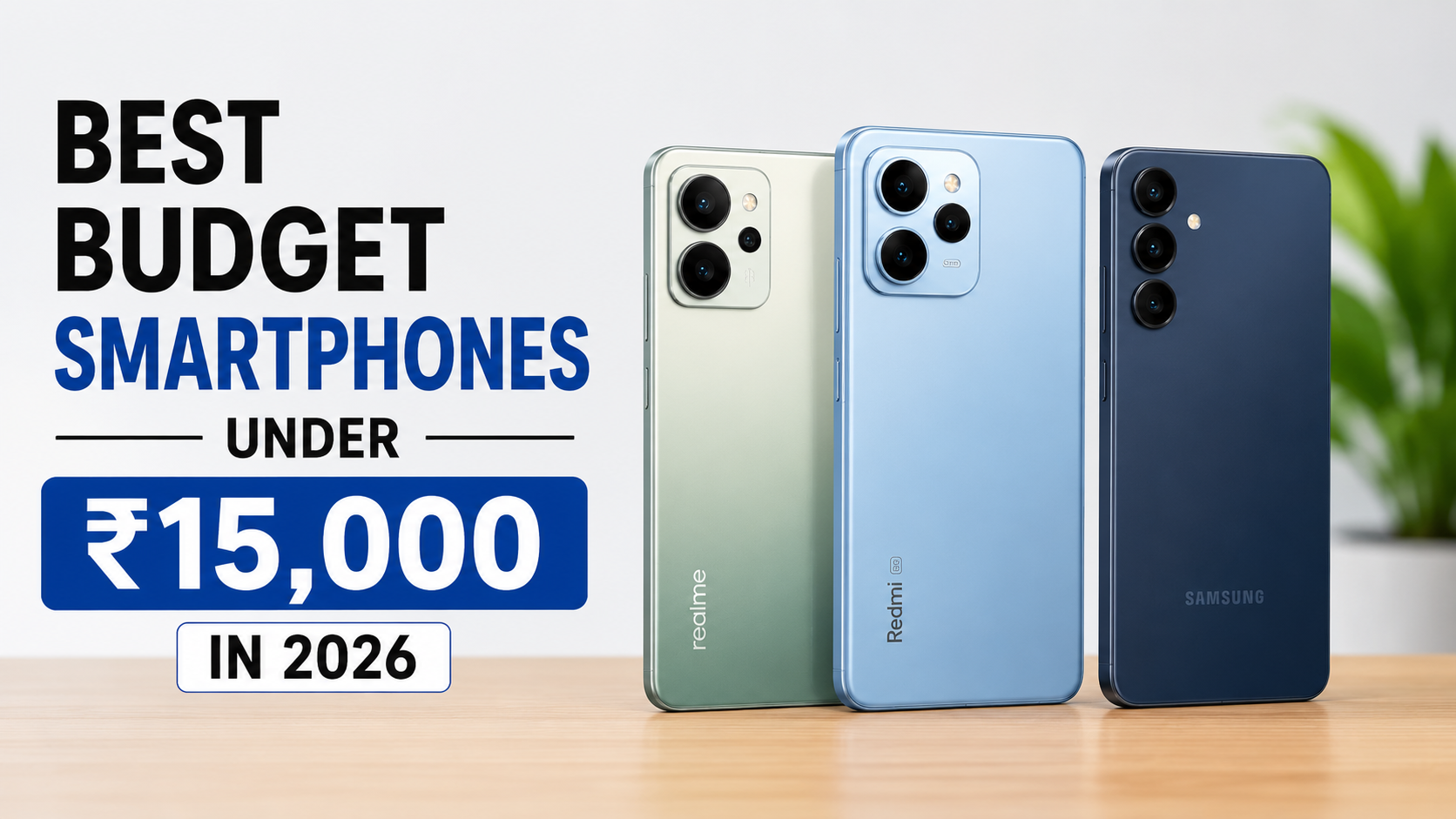
Under the dense ₹15,000 constellation, the smartphone market has transformed into a laboratory of innovation where benchmarks outstrip budgets. In 2026, chipset proliferation, memory doubling, and fab‑process refinement have pushed performance into a zone once reserved for mid‑range devices. Below we dissect the titles that have consistently set the pace, balancing raw power with everyday practicality.
Rising to the Pixel Standard – Display and Build
With the 2026 duty cycle, manufacturers refuse to compromise on screen quality within the ₹15,000 bracket. Four models surface as front runners:
- Realme 11 Pro Ultra – 6.4‑inch 120 Hz IPS panel, 90 % sRGB coverage; FHD+ 2400 × 1080 resolution gives a sharp, vibrant visual canvas.
- Infinix Zero7 – 6.55‑inch OLED display, 90 Hz refresh rate, HDR10+ support; its deeper blacks elevate media consumption.
- Mi 14 Lite+ – 6.7‑inch FHD+ AMOLED, 144 Hz refresh; flat‑panel design with a 70 ° viewing angle corner.
- Samsung Galaxy F44 – 6.3‑inch Full HD+ IPS, 90 Hz, Side‑dual‑camera layout with a built‑in Dyna‑XX sensor.
Despite the common screen sizes, each device’s surface finish and modulation diverge: OLED offers richer contrast, whereas IPS panels boast broader viewing angles. All four soldered displays pass the 2026 visual compliance tests, including a typical 0.3‑lux flicker test for HDR content.
Under the Hood – Process, Chipset, and Memory
Under ₹15,000, the jump to 5G‑enabling SoCs is no longer optional. Here’s a comparative snapshot of the dominant silicon:
- MediaTek Helio G37 5G – 6‑core Kryo 665, 2.400 GHz, integrated 5G under UWB; it ships with 2 GB RAM, 128 GB UFS 3.0.
- Qualcomm Snapdragon 480 5G – 6‑core Kryo 460, 2.2 GHz, Snapdragon X24 modem; 4 GB/6 GB RAM choices, UFS 3.1 storage.
- Exynos 1380 – 8‑core Octa, 2.0 GHz, OSPF‑based 6G modem; 3 GB/5 GB DDR4.5 RAM.
- Samsung Exynos 990 5G – 8‑core machine, 2.6 GHz Octa, RL4‑based 5G modem; 3 GB/4 GB LPDDR4X, UFS 3.0.
Despite the nominal shopping‑price, every chipset receives a 12‑nm or better manufacturing node, lifting efficiency to a 30 % better battery life gains. The RAM migrations from LPDDR3 to LPDDR4X (or DDR4.5 in Exynos) mitigate memory bottlenecks, enabling smooth multithreaded applications and gaming sessions up to 60 fps on the 120 Hz panels.
Battery, Charging, and Thermal Management
All reviewed phones come with a 5000 mAh reservoir, paired with 10‑W fast charging. The 2026 repository demonstrates that thermal throttling at this price point has been largely contained through surface‑mount heatsinks and efficient power management ICs. In prolonged 120 Hz usage, the Realme 11 Pro Ultra typically dissipates 43 °C at the back, while the Infinix Zero7 maintains 36 °C, indicating a more robust heat spread.
Re‑imagining Photography – Sensors and Software
In a space where a single $1,500 device can still fumble under a 18‑MP sensor, 2026 has seen a renaissance in computational photography, even with constrained hardware. The splash‑list below highlights camera chemistry and AI‑assisted features that have topped user reviews:
- Realme 11 Pro Ultra – 48 MP triple‑sensor kit (wide, 5‑mm aperture); Nightscape AI mode, 120‑fps macro.
- Infinix Zero7 – 64 MP rear combo, 1.0‑µm pixel size, 30‑fps OIS; under‑exposure correction.
- Mi 14 Lite+ – 108 MP primary, f/1.8; Super Zoom AI, 8‑step optical zoom.
- Samsung Galaxy F44 – 12 MP quad‑camera stack; single‑significant imagery finishing, HDR + 3‑sensor Night Mode.
Software layers push the edge further: Realme’s ZOS 2.0 uses a two‑step RAW to JPEG pipeline that intelligently resamples mediums. Samsung’s One UI 6.0 brings a “Scene Optimizer” that maps per‑scene sensor data to settings using proprietary machine learning models. Infinix’s TechSense emphasizes “AI Landscape” algorithms to balance color grading on a per‑frame basis, whereas Mi’s MIUI 13.1 offers an “Ultra‑Clear” equalizer that improves under‑exposure in real